
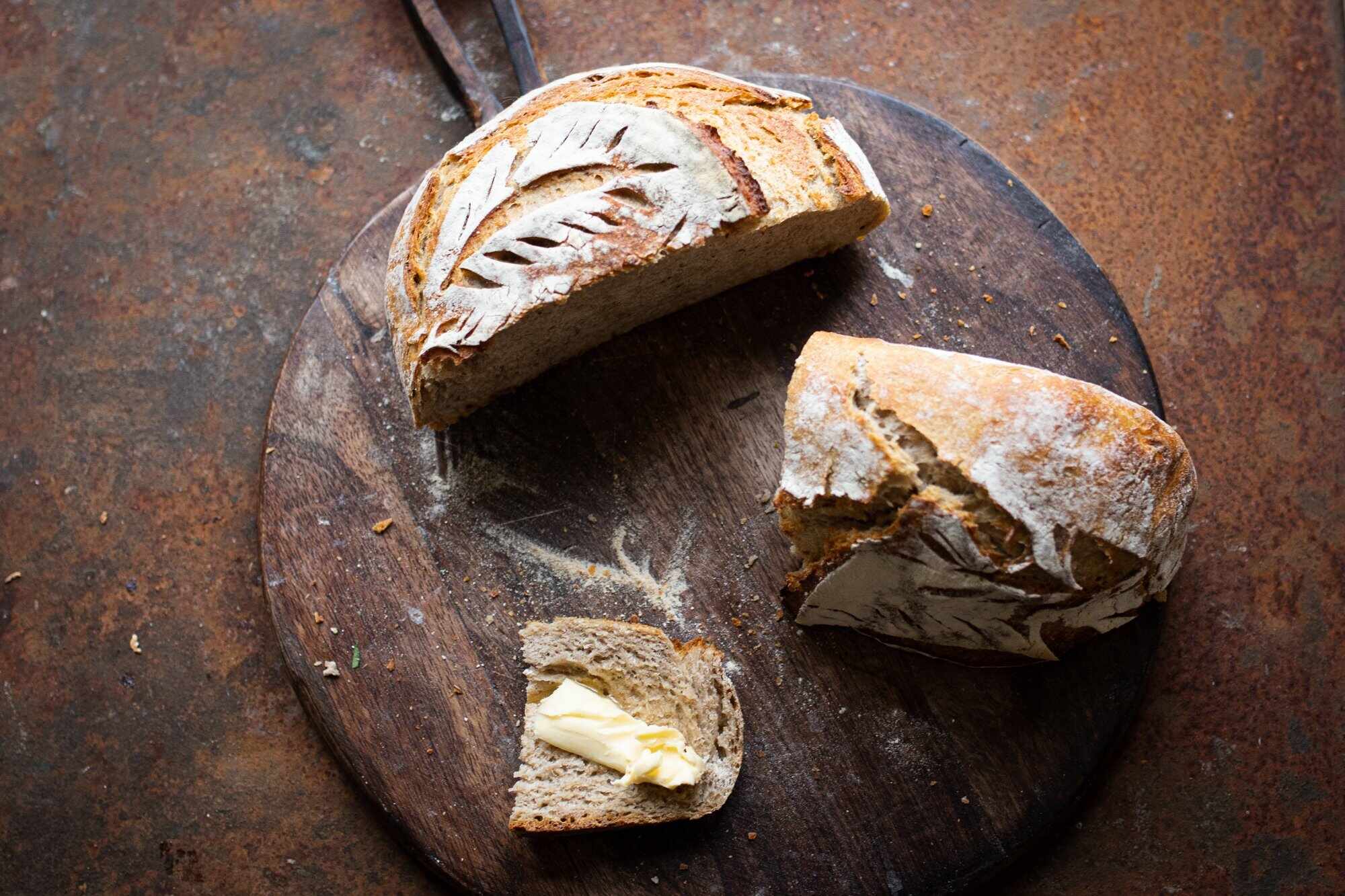
This sourdough rye bread recipe is perfect for those who appreciate the rich, earthy flavors of rye flour. With a chewy crust and a dense, moist crumb, this bread is ideal for sandwiches or simply enjoyed with a pat of butter.
One of the key ingredients in this recipe is rye flour, which may not be as common in every household as all-purpose flour. Additionally, you'll need an active sourdough starter, which requires some planning ahead if you don't already have one. Both of these items can typically be found in well-stocked supermarkets or specialty food stores.

Ingredients for Sourdough Rye Recipe
Rye flour: This flour gives the bread its distinctive flavor and dense texture.
Active sourdough starter: This fermented mixture of flour and water helps the bread rise and adds a tangy flavor.
Water: Used to hydrate the dough and activate the starter.
Salt: Enhances the flavor of the bread and helps control the fermentation process.
Technique Tip for Sourdough Rye
When mixing the rye flour, sourdough starter, and water, ensure that you achieve a uniform consistency. Rye flour tends to be stickier and denser than wheat flour, so using a wooden spoon or your hands can help incorporate all the ingredients thoroughly. During the fermentation period, keep the dough in a warm, draft-free area to encourage optimal microbial activity. When adding the salt after fermentation, sprinkle it evenly over the dough and knead gently to distribute it without deflating the dough too much. For the final rise, a well-floured proofing basket will help maintain the loaf's shape and prevent sticking. When transferring the dough to the preheated Dutch oven, use parchment paper to avoid burns and ensure a smooth transfer.
Suggested Side Dishes
Alternative Ingredients
rye flour - Substitute with whole wheat flour: Whole wheat flour has a similar texture and nutritional profile, though it will impart a slightly different flavor.
rye flour - Substitute with spelt flour: Spelt flour offers a nutty flavor and similar baking properties, making it a good alternative.
active sourdough starter - Substitute with commercial yeast: Use 1 teaspoon of commercial yeast mixed with 50 g of flour and 50 ml of water to mimic the leavening effect of the sourdough starter.
active sourdough starter - Substitute with buttermilk: Buttermilk can provide a tangy flavor and some leavening, though it won't replicate the fermentation process.
room temperature water - Substitute with milk: Milk can add richness and a slightly different texture to the dough.
room temperature water - Substitute with beer: Beer can add a unique flavor and some additional yeast, enhancing the bread's complexity.
salt - Substitute with sea salt: Sea salt can provide a more nuanced flavor compared to regular table salt.
salt - Substitute with kosher salt: Kosher salt has a coarser texture and can be used in the same quantity to achieve a similar taste.
Alternative Recipes Similar to Sourdough Rye
How to Store or Freeze This Recipe
Allow the sourdough rye bread to cool completely on a wire rack before considering storage. This ensures that any residual moisture evaporates, preventing a soggy crust.
For short-term storage, place the bread in a paper bag or wrap it in a clean kitchen towel. This helps maintain the crust's texture while keeping the interior moist. Store at room temperature for up to 3 days.
If you prefer to use plastic, wrap the bread tightly in plastic wrap or place it in a resealable plastic bag. This method can keep the bread fresh for up to 5 days but may soften the crust.
For longer storage, slice the bread before freezing. This allows you to take out only what you need, reducing waste and maintaining freshness.
Wrap individual slices or the entire loaf in plastic wrap, followed by a layer of aluminum foil. This double-layer method helps prevent freezer burn and preserves the bread's quality.
Place the wrapped bread in a resealable freezer bag, removing as much air as possible before sealing. Label the bag with the date to keep track of its freshness.
Store the bread in the coldest part of your freezer, where it can last for up to 3 months without significant loss of quality.
To thaw, remove the desired amount of bread from the freezer and let it sit at room temperature for a few hours. For a quicker option, you can use a microwave or toaster oven.
For a freshly baked taste, reheat the thawed bread in a preheated oven at 180°c (350°f) for about 10 minutes. This will help restore its crusty exterior and warm, soft interior.
Avoid storing sourdough rye bread in the refrigerator, as this can cause it to dry out and become stale more quickly.
How to Reheat Leftovers
Preheat your oven to 180°C (350°F). Wrap the sourdough rye bread in aluminum foil to retain moisture. Place it directly on the oven rack and heat for about 10-15 minutes until warmed through.
For a quick reheat, slice the bread and place the slices in a toaster. Toast on a medium setting until the edges are crispy and the center is warm.
If you prefer a softer texture, place the bread slices on a microwave-safe plate. Cover with a damp paper towel and microwave on medium power for 20-30 seconds. Be cautious not to overheat, as this can make the bread chewy.
For a stovetop method, heat a skillet over medium heat. Place the bread slices in the skillet and cover with a lid. Heat for 2-3 minutes on each side, or until the slices are warmed through and slightly crispy on the outside.
If you have a steamer, you can steam the bread slices for about 1-2 minutes. This method helps retain moisture and gives the bread a fresh, soft texture.
Best Tools for Making Sourdough Rye
Mixing bowl: A large bowl to combine the rye flour, sourdough starter, and water.
Damp cloth: Used to cover the mixing bowl and keep the dough moist during the resting period.
Proofing basket: A floured basket to shape and let the dough rise.
Dutch oven: A heavy pot with a lid, preheated to bake the bread, ensuring a crispy crust.
Wire rack: A rack to cool the bread completely before slicing.
Measuring scale: To accurately measure the rye flour, sourdough starter, and salt.
Measuring jug: To measure the room temperature water.
Spatula: To mix the ingredients thoroughly.
Oven mitts: To safely handle the hot Dutch oven.
How to Save Time on Making This Recipe
Prepare ingredients in advance: Measure and set out all ingredients before starting to save time during the process.
Use a stand mixer: Mix the dough with a stand mixer to reduce manual effort and speed up the process.
Shorten fermentation: Use a warm spot in your kitchen to speed up the fermentation process.
Preheat the oven early: Start preheating your oven while the dough is rising to save time.
Skip the proofing basket: Shape the dough directly on parchment paper to skip transferring steps.
Sourdough Rye Recipe
Ingredients
Main Ingredients
- 500 g Rye flour
- 250 g Sourdough starter active
- 350 ml Water room temperature
- 10 g Salt
Instructions
- 1. In a large mixing bowl, combine the rye flour, sourdough starter, and water. Mix until well combined.
- 2. Cover the bowl with a damp cloth and let it rest at room temperature for 12-24 hours.
- 3. After the fermentation period, add the salt and mix thoroughly.
- 4. Shape the dough into a round loaf and place it in a floured proofing basket. Let it rise for 2-3 hours.
- 5. Preheat your oven to 220°C (430°F) with a Dutch oven inside.
- 6. Carefully transfer the dough into the preheated Dutch oven. Bake for 30 minutes with the lid on, then remove the lid and bake for another 10 minutes.
- 7. Let the bread cool completely on a wire rack before slicing.
Nutritional Value
Keywords
More Amazing Recipes to Try 🙂
- Cardamom Currant and Cashew Bread Recipe1 Hours
- Chocolate Chip Bread Recipe1 Hours
- Sunflower Almond Wheat Bread Recipe55 Minutes
- Caraway Rye Bread Recipe50 Minutes
- Golden Crescent Rolls Recipe35 Minutes
- Lassy Bread Recipe50 Minutes
- Cinnamon Swirl Chocolate Chip Bread Recipe1 Hours 5 Minutes
- Bread Machine Bagels Recipe35 Minutes






Leave a Reply